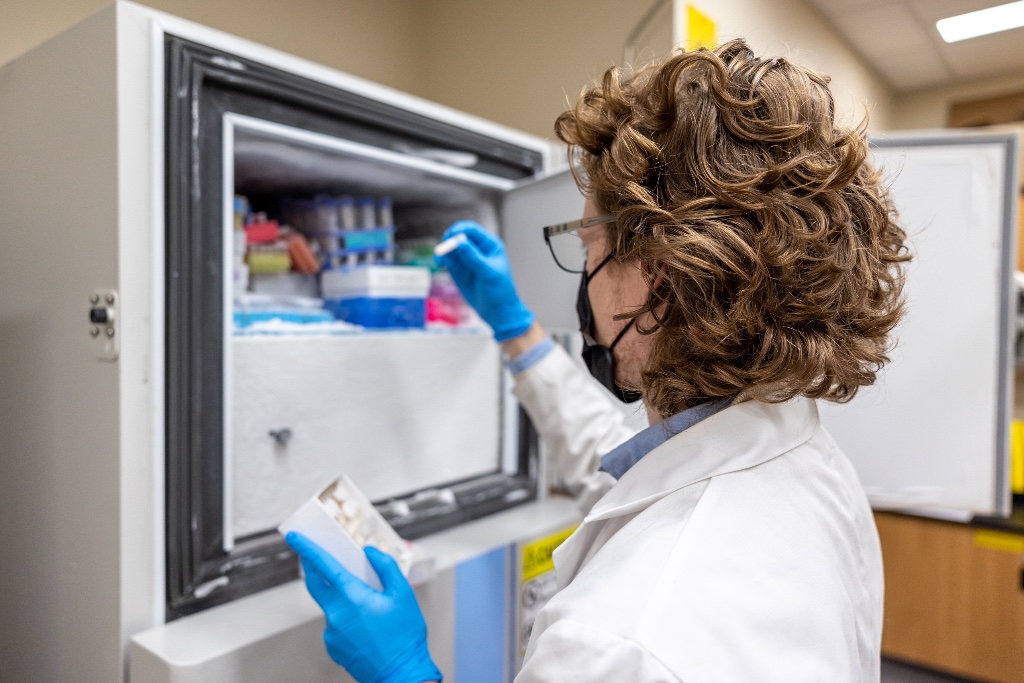
Canada's largest equine biobank.
8 years
Of continuous collection
250+
Horses in the record
1,000+
Samples analyzed
31+
Biomarkers tracked per horse
Exposure. Nutrition. Microbiome.
Metaboly works across three interconnected analytical lanes. Each one illuminates a different dimension of what shapes the horse's biological state.
Exposures & Burdens
What the horse carries — from its environment, its feed, and the world around it.
Environmental contaminants, toxic metals, pesticide and herbicide residues, mycotoxins, feed contamination, and cumulative exposure patterns that routine diagnostics were not designed to find.
Toxic elemental metals
Lead, cadmium, arsenic, mercury, and chromium can accumulate through soil, water, and feed — often well below the threshold of acute toxicity but still biologically significant over time.
Pesticides & herbicide residues
Glyphosate, 2,4-D, atrazine, and fungicide families reach horses through treated forage, hay, and water. Targeted residue analysis is the only way to confirm presence or absence.
Mycotoxins & mold burden
Aflatoxins, fumonisins, zearalenone, and trichothecenes are heat-stable, invisible, and common in stored feed. Co-occurrence of multiple species matters — individual thresholds can mislead.
Feed contamination
Cross-contamination during manufacturing, batch variability, and ionophore carry-over represent serious risks that visual inspection and label trust cannot detect.
Cumulative exposure
Not every burden is acute. Low-level exposures that stack over time — across water, feed, environment, and management inputs — can influence biological function before they produce obvious signs.
Going after your biggest challenges.
Some of the most devastating problems in the horse community remain poorly explained by routine testing. Metaboly has built a coordinated, multi-disciplinary investigation to hunt for the hidden biological patterns that fragmented approaches miss.

Colic
The leading cause of premature death in horses. Often strikes without clear warning.
Why it's hard to explain
Routine diagnostics frequently return normal results between episodes. Triggers vary widely between individuals. Many cases show no obvious anatomical cause until it's too late.
What we investigate
- Microbiome shifts preceding episodes
- Subtle metabolic instability patterns
- Environmental and dietary triggers
- Motility disruption markers
- Early inflammatory signatures
Our hypothesis: We suspect recurring pre-episode patterns exist across biological layers — microbiome, metabolites, inflammatory markers — but they're invisible to single-layer testing.
We're the first to map the horse.
Every analysis Metaboly runs contributes to a growing equine-specific analytical library — built around equine biology, and strengthened by every horse we study.
Microbial community ordination
Profiles form distinct ecological clusters — not random distributions. Pattern recognition improves with scale.
Pushing the boundary.
A few labs and clinics will profile bacteria and hand you a report. Everything else below simply isn't available anywhere else.