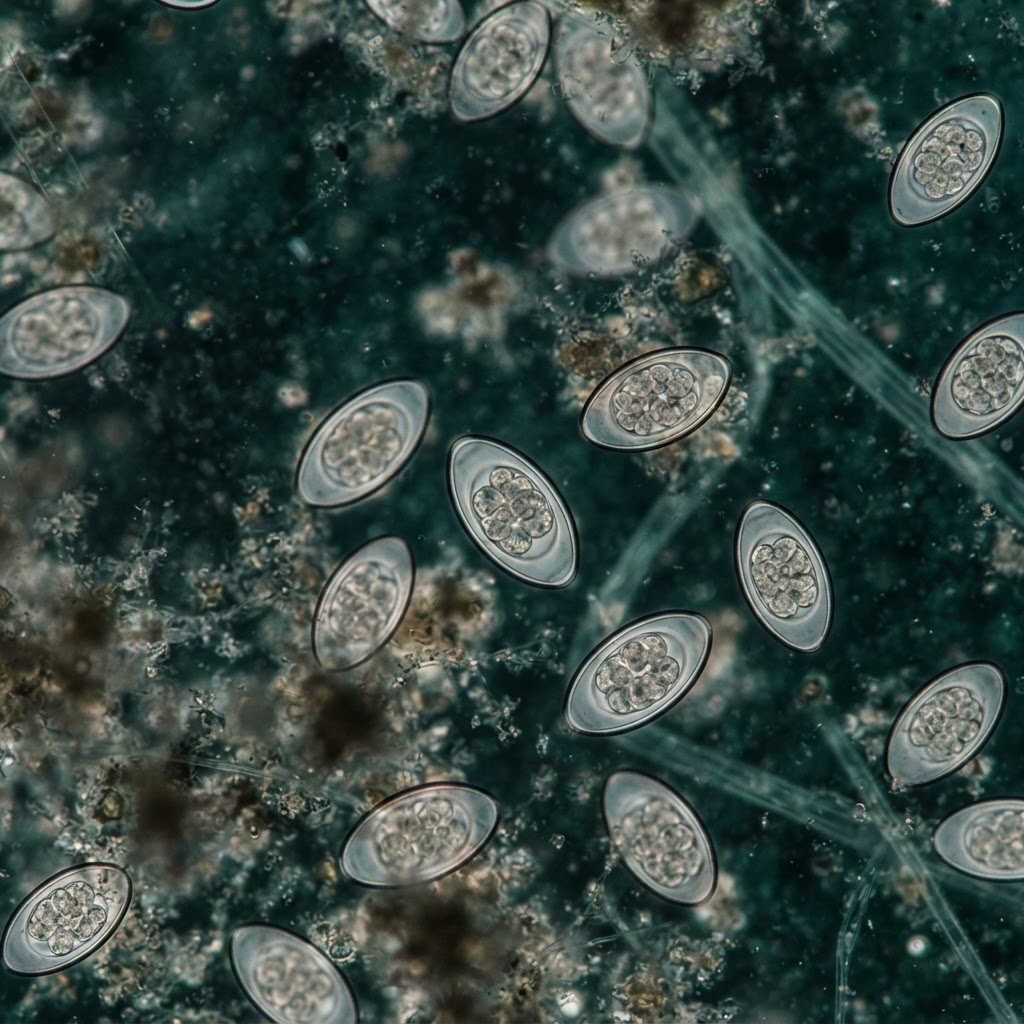
Fecal Egg Count
The first kit-based parasite test built for Canadian horse owners.
A $15 fecal egg count with real microscope images, so deworming decisions come from a number instead of a calendar — and the dewormers you rely on keep working.
Most horses are dewormed without anyone knowing what they're carrying
A fecal egg count counts the parasite eggs in a fresh manure sample. The result — eggs per gram, or EPG — tells you how much that horse is shedding right now, which is the one piece of information a deworming decision actually depends on.
Without it, you are treating an average rather than a horse. Some horses in the barn carry almost nothing and are being dosed anyway; others are shedding heavily and quietly seeding the pasture for everyone else.
It's about as easy as testing gets: collect a sample, mail it in, and your results show up in the Metaboly portal within 5–10 business days, with microscope images attached. Shipping is covered both ways.
Deworming blind
Every horse gets the same dose on the same schedule, and you never find out whether it was needed or whether it worked.
With a count
You know which horses are shedding, which can be left alone, and whether the product you used actually reduced the burden.
FEC is also built into Protect, our foundational health package, if you'd rather combine parasite monitoring with heavy metal and elemental screening.
The dewormer that worked last year may not be working now
Most horses in Canada are still dewormed on a rotation set decades ago — same product, same months, every horse in the barn. It feels responsible, and for a long time it was. The problem is that it quietly selects for the worms that survive the drug, and those are the ones that repopulate the pasture.
If you have never run a count before and after treatment, there is no way to know whether your last dose killed anything at all. Plenty of farms are treating on schedule and still carrying a heavy burden, because the product stopped working and nobody measured it.
The drugs are running out
There are only three chemical classes of equine dewormer, and no new ones are coming. Small strongyle resistance to benzimidazoles and pyrantel is already widespread across North America, and reduced ivermectin egg-reappearance periods are now being reported too.
Blanket deworming is what drives it
Every time you treat a horse that didn't need treating, you hand the surviving worms another round of selection. Roughly 20% of horses shed 80% of the eggs — treating the whole barn mostly pressures the parasites without protecting the horses.
Resistance is permanent
Once a farm's worm population stops responding to a drug class, it does not go back. You are managing a resource you cannot replace, and the only lever you have is how often you use it.
Testing is the lever
A $15 count tells you which horses are actually shedding, so treatment goes where it does something. That protects your horses now and keeps the dewormers you rely on working years from now.
No clinic drive, and priced so you can repeat it
A fecal egg count is a genuinely inexpensive test to run, and it is often priced higher than it needs to be. But cost isn't really the main obstacle — logistics is. Almost everywhere in Canada, getting a count means driving a sample to a vet clinic, and for anyone in a remote area, or anyone who simply doesn't want to make the trip, that is where the idea quietly dies. A tube of dewormer ends up being the easier choice.
So we handle both halves. The kit comes to your farm, the sample goes back by mail with shipping covered in both directions, and the price is set at $15 so repeating it is easy. Monitoring only becomes useful when it happens regularly, and that means it has to be genuinely easy to do from where you actually keep your horses.
No clinic drop-off — the kit comes to the farm and the sample goes back by mail.
Price should never be the reason a horse gets dewormed blind.
Testing two to four times a year only works if the test is inexpensive enough to repeat.
Before-and-after counts are the only way to catch a failing dewormer, so the price accounts for two.
The more counts we run across Canada, the better the regional parasite picture gets for everyone.
Worth knowing: order two kits at once and you can run a count before you treat and again about two weeks after. That pair of numbers tells you whether the dewormer on your shelf still works on your farm — for $30.
How it works
Three steps, no clinic visit needed.
Collect a fresh sample
Everything you need is in the kit, along with clear instructions. You don't need any special experience to do this.
Mail it back, prepaid
Seal it up and drop it in the mail. Return shipping is already covered, so there's nothing to arrange on your end.
Check your results online
Your EPG count and microscope images show up in your Metaboly portal within 5–10 business days, saved to your horse's record.
What you receive
Every order ships in a Metaboly collection kit, and you get more than a number back — you get to see the evidence yourself.
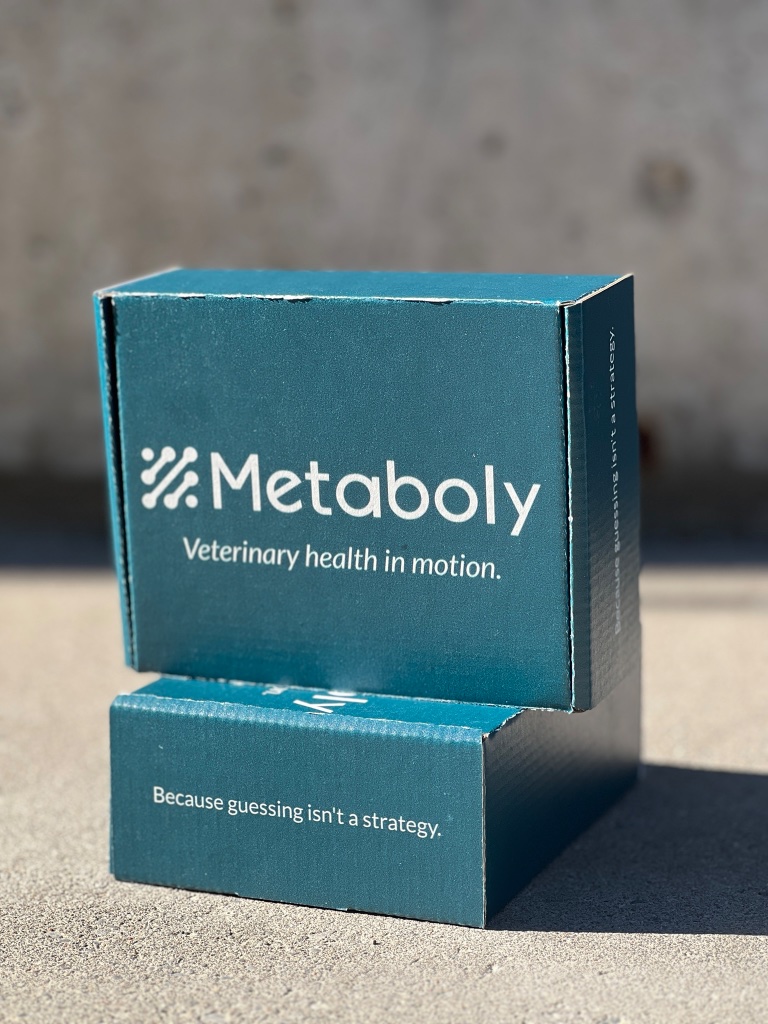
Your collection kit
Everything you need arrives in one kit, prepaid return shipping included. Collect, mail it back, done.
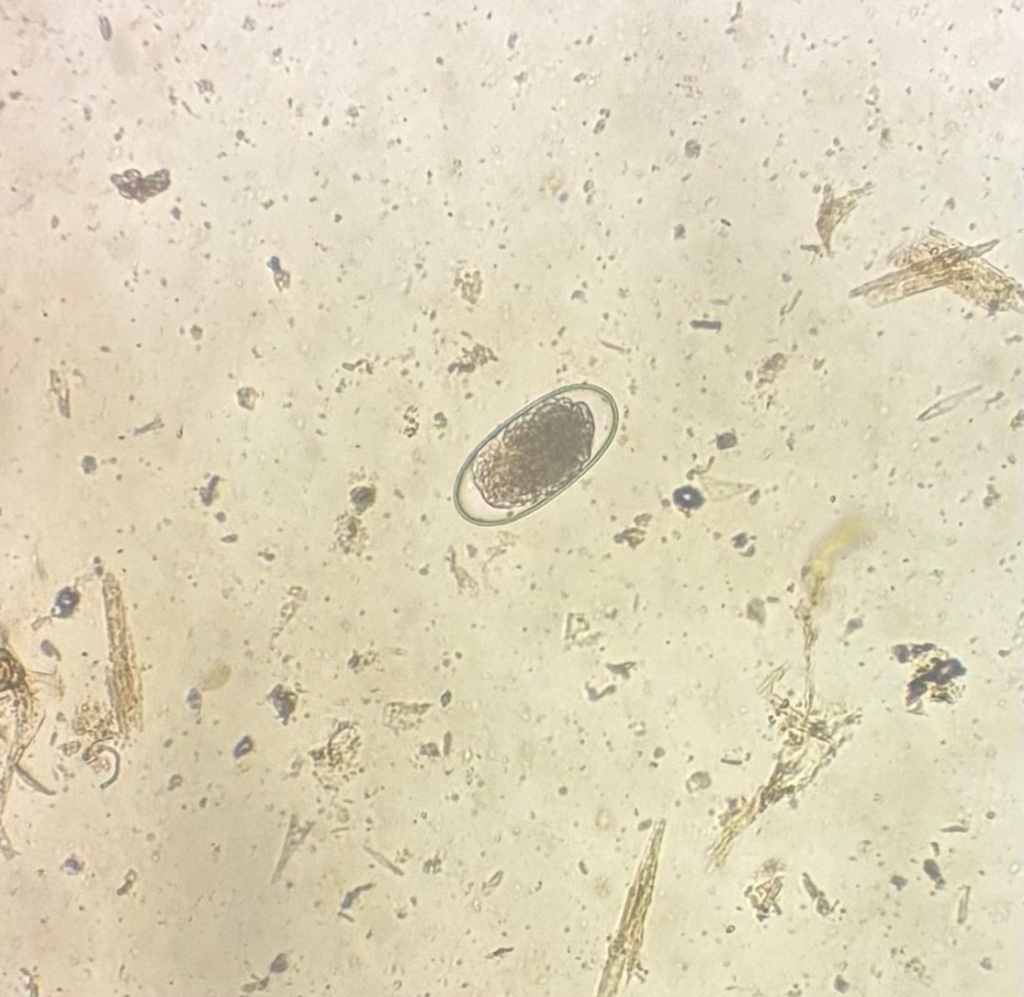
Microscope images with every result
You get actual microscope images alongside your EPG count, so you can share exactly what we saw with your vet, not just a number.
Common questions
What's included
Fecal egg count
We count parasite eggs per gram (EPG), so you get a real number for where your horse stands — not a guess.
Digital results
Results land in your Metaboly portal, tied to your horse's record, so you can look back and compare over time.
Easy submission
Mail-in collection with prepaid return shipping — no courier to book, no packaging to hunt down.
Best for
Routine parasite checks, a few times a year
Owners who'd rather deworm based on need than a fixed calendar
Barns building out an evidence-based parasite program
A low-cost, easy way to try Metaboly for the first time
Tracking parasite burden across a herd over time
Also in Protect
Want more than parasite monitoring? Protect includes FEC plus toxic heavy metal and broad elemental screening in one package.
View ProtectKnow the burden. Deworm with reason.
A $15 fecal egg count with microscope images included — an easy first step toward deworming based on evidence instead of habit.